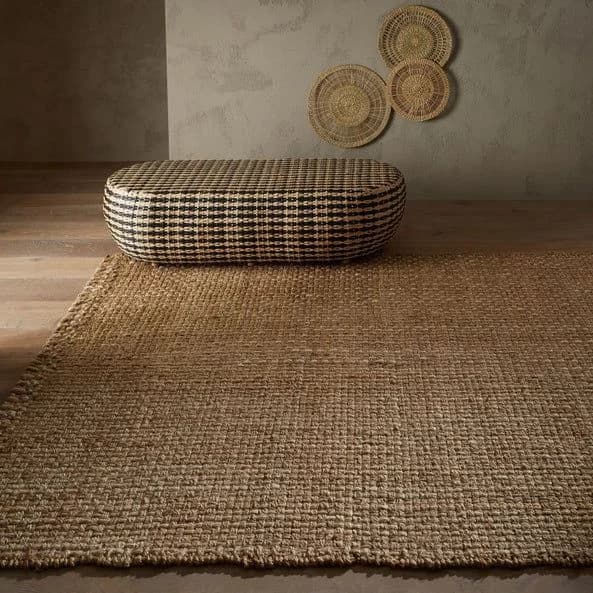
Hand-spun jute fibre - sustainable rug raw material from West Bengal
Sustainability

Carbon-negative by nature.
Handmade by tradition.

MKT Rugs procures from carbon-negative jute fields, 150 km hyper-local bast-fibre sourcing, low-impact dye kitchens, fair-wage artisan cooperatives, renewable electricity investments, and biodegradable carpet lifecycles - aligning ISO 9001:2015 manufacturing in North 24 Parganas.

Four Pillars

How we measure “sustainable”

Sustainability isn't a marketing line at MKT Rugs - it's four commitments that travel from the jute field to the shipping container.

Carbon-Negative Jute

Jute is one of the few fibres on earth that absorbs more CO₂ during growth than it emits across its lifecycle. A single hectare of jute absorbs an estimated 15 tonnes of CO₂ and releases 11 tonnes of oxygen per growing season - making every MKT Rugs jute carpet a small climate dividend.

150 km Local Sourcing

All raw jute and natural fibres are sourced from West Bengal farmers within a 150 km radius of our Gopalnagar facility. Short supply chains mean lower freight emissions, traceable provenance, and direct income for rural farming families.

Low-Impact Natural Dyes

We use undyed natural-fibre yarns wherever possible, and low-impact, AZO-free natural dyes when colour is needed. No formaldehyde, no chrome, no PFAS, no VOC adhesives - making every rug safe for nurseries, allergy-sensitive homes, and pets.

100% Biodegradable

Every MKT Rugs natural-fibre rug is designed to compost back into the earth at end of life. No synthetic backings, no glue layers, no petroleum-derived latex. Cut, soak, and bury - the rug returns to soil within 12–18 months.

Golden jute fibre drying in the sun - West Bengal

Why we lead with jute

The most sustainable fibre on earth

Jute (Corchorus capsularis) grows in 4–6 months, needs no pesticides, very little fresh water, and yields 15–20 times more biomass per hectare than cotton. The Ganges-Brahmaputra delta around West Bengal is one of the only regions in the world with the soil chemistry, monsoon timing, and traditional retting expertise to grow export-grade jute.

  • Absorbs ~15 tonnes CO₂ per hectare per growing season
  • Releases ~11 tonnes of oxygen per hectare per season
  • Zero pesticide requirement in the standard growing cycle
  • Fully biodegradable in 12–18 months under natural conditions
  • Supports more than four million West Bengal farming households
See jute collections

Our material library

Three natural fibres, one ethic

Jute, sisal, and seagrass - each selected for its sustainability profile, durability under real-world use, and the artisan tradition that shaped it.

Our flagship golden fibre

Jute

Raw jute sourced directly from West Bengal farmers within 150 km of our facility. Carbon-negative during growth, 100% biodegradable.

Sisal

Low Impact Cultivation - Sisal

Sisal requires minimal pesticides and water, which contributes to a low environmental footprint compared to synthetic materials.

Seagrass

Untamed. Untreated. Sustainable.

Seagrass requires no pesticides, no irrigation, and minimal cultivation, making it one of nature's most effortless and environmentally responsible fibres.

Lifecycle

Field to floor to soil - a closed loop

Five stages, no synthetic shortcuts.

  1. 01

    Farmed within 150 km

    Jute is sown in monsoon, harvested without pesticides, and bought direct from West Bengal farming cooperatives.

  2. 02

    Hand-spun by artisans

    Fibres are softened, sun-dried, and hand-spun into yarn by our 25,000-strong artisan network.

  3. 03

    Hand-braided, woven, or tufted

    200+ weavers craft each rug on traditional looms or with precision finishing for export-grade consistency.

  4. 04

    Packed plastic-free

    Rugs roll around acid-free tubes, wrap in breathable cotton, and ship in moisture-resistant export cartons.

  5. 05

    Composts at end-of-life

    After 8–12 years of use, the rug returns to soil. No landfill, no microplastics - just biology completing the loop.

Audited & accountable

Compliance, not claims

Our sustainability commitments are documented through third-party audits and member organisations - buyer audits and on-site inspections welcome.

certification

ISO 9001:2015

Quality Management System certification.

Issued by: International Organization for Standardization

membership

CEPC Member

Recognised member of India's apex body for carpet exporters.

Issued by: Carpet Export Promotion Council, Ministry of Textiles, Government of India

compliance

SEDEX/SMETA-aligned

Social compliance practices aligned with SMETA audit standards.

Issued by: SEDEX (Supplier Ethical Data Exchange)